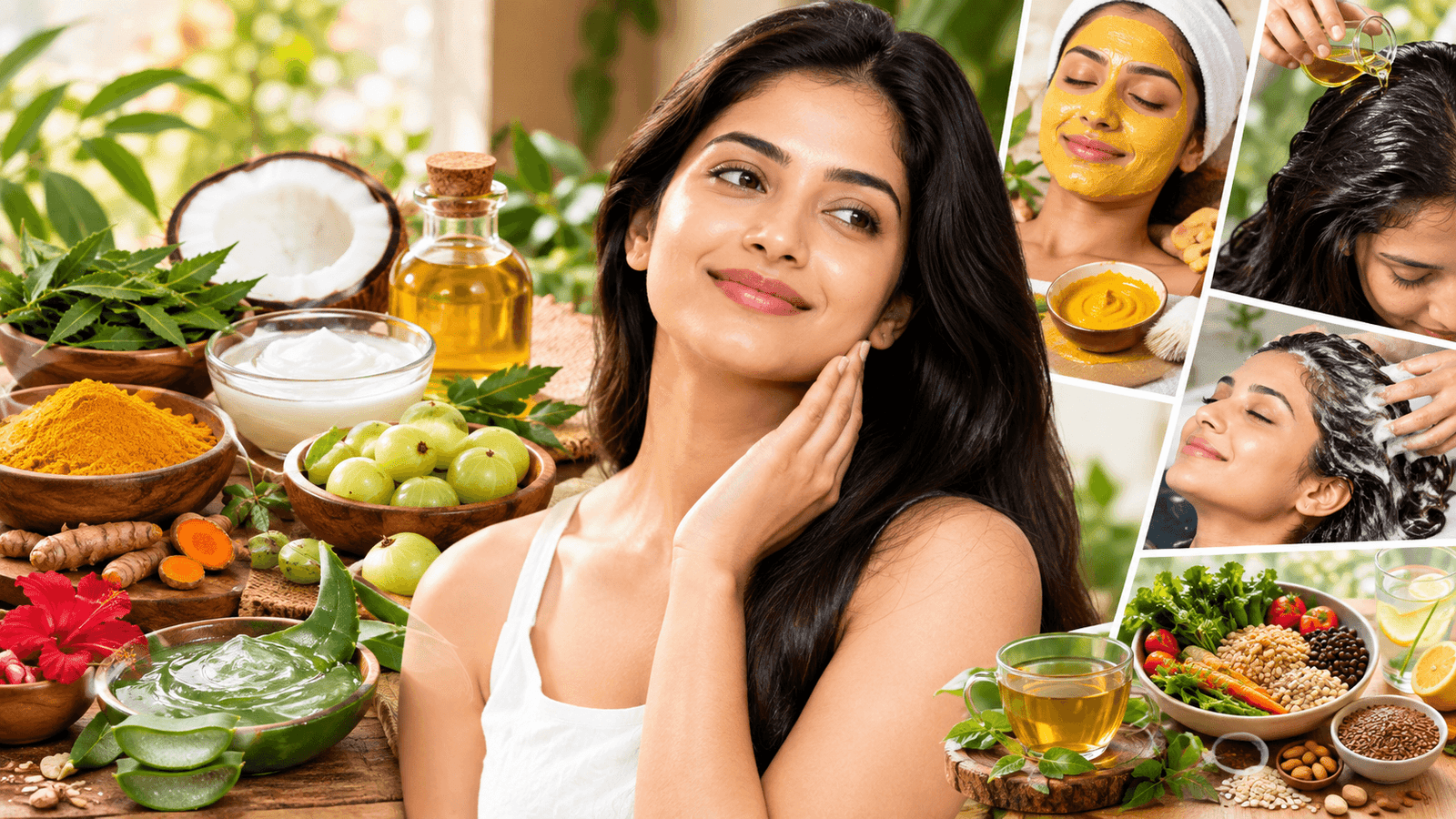

Ayurveda has been part of Indian wellness traditions for centuries, with a holistic approach that connects everyday habits, nutrition, self-care, and overall well-being with healthy-looking skin and hair. Today, Ayurvedic beauty practices are becoming increasingly popular because they often focus on simple ingredients such as turmeric, aloe vera, coconut oil, amla, neem, and herbs.
However, “natural” does not automatically mean that something is suitable for everyone. Modern research on Ayurvedic ingredients is promising in some areas but still limited for many beauty claims, so traditional remedies are best viewed as complementary rather than replacements for proven dermatological care.
If you’re looking for a simple Ayurvedic-inspired beauty routine, the key is consistency. Rather than trying dozens of remedies at once, choose a few gentle practices that suit your skin and hair type.
What Is Ayurvedic Beauty Care?
Ayurvedic beauty care traditionally takes a whole-body approach to appearance and wellness. Instead of focusing only on individual concerns such as dry skin, dullness, or hair fall, Ayurveda emphasizes lifestyle, diet, daily routines, herbs, oils, and personalized care.
Commonly used Ayurvedic beauty ingredients include:
- Turmeric
- Aloe vera
- Neem
- Amla
- Coconut oil
- Sesame oil
- Rose water
- Sandalwood
- Fenugreek
- Hibiscus
- Bhringraj
Many of these ingredients have a long history of traditional use. Scientific research is also investigating several of them, although the strength of evidence varies considerably from ingredient to ingredient.
1. Start Your Day With Hydration
One of the simplest Ayurvedic-inspired beauty habits is paying attention to hydration.
After waking up, drink a glass of water and continue drinking fluids throughout the day according to your thirst and individual needs.
Adequate hydration supports normal body functions and can help prevent the dry, tight feeling associated with dehydration. However, drinking excessive amounts of water will not magically remove wrinkles or dramatically transform your complexion.
For better overall skin health, hydration should be combined with a balanced diet, adequate sleep, gentle skincare, and sun protection.
2. Use Aloe Vera for a Soothing Skin Routine
Aloe vera is one of the most popular traditional ingredients used in natural skincare.
Fresh aloe gel or a properly formulated aloe product can feel cooling and soothing on the skin. It can be particularly appealing when the skin feels dry or irritated.
How to use aloe vera
Apply a thin layer of suitable aloe vera gel to clean skin and allow it to sit according to the product instructions. If using fresh aloe, make sure the preparation is clean and discontinue use if you experience burning, itching, redness, or irritation.
Don’t assume that every aloe product is automatically gentle. Fragrances, preservatives, and other ingredients can cause reactions in sensitive individuals.
3. Add Turmeric Carefully to Your Beauty Routine
Turmeric is probably one of the most recognizable Ayurvedic ingredients.
Its active compound, curcumin, has antioxidant and anti-inflammatory properties and has been investigated for various dermatological applications. A systematic review found some encouraging evidence, but researchers also emphasized that the available clinical evidence remains limited and more research is needed.
A traditional turmeric face mask may contain a small amount of turmeric mixed with ingredients such as yogurt or another suitable base.
But be careful: turmeric can temporarily stain the skin and may irritate some people.
Never assume that more turmeric means better results.
Before applying a homemade mixture to your face, test a small area first.
4. Try Coconut Oil for Dry Hair
Coconut oil has been used traditionally in Indian hair care for generations.
It can help condition the hair and reduce the feeling of dryness. Coconut oil is also commonly used as a pre-shampoo oil treatment.
Simple coconut oil hair routine
- Take a small amount of coconut oil.
- Apply it primarily to the lengths and ends of your hair.
- If your scalp tolerates oil well, massage a small amount gently into the scalp.
- Leave it for a period that suits your routine.
- Wash thoroughly with a gentle shampoo.
You don’t need to soak your hair in oil. Using too much can make washing difficult and may leave the scalp greasy.
Also, if you develop scalp irritation or facial breakouts around the hairline, stop the treatment. Hair products containing oils can sometimes contribute to acne around the forehead and hairline.
5. Make Amla Part of Your Hair-Care Routine
Amla, or Indian gooseberry, has a long history in traditional Indian hair care.
Amla is commonly found in hair oils, powders, shampoos, and other formulations. Traditionally, it is associated with stronger-looking, healthier hair and is often used as part of oiling routines.
You can choose a commercially prepared amla hair product or use an appropriately prepared traditional formulation.
However, it’s important to distinguish traditional use from proven medical treatment. If you’re experiencing significant or sudden hair loss, don’t rely solely on amla or other home remedies. Hair loss can have many causes and may require professional evaluation.
6. Massage Your Scalp With Oil
Scalp oiling is a classic Indian hair-care practice.
A gentle scalp massage can make hair care feel relaxing and may help distribute oil across the scalp and hair. Traditional Ayurvedic hair oils may contain ingredients such as sesame oil, coconut oil, amla, bhringraj, or other herbs.
The important word is gentle.
Avoid aggressively scratching or rubbing your scalp because excessive friction can cause irritation.
A simple routine
Warm a small amount of oil slightly—not excessively—and massage it gently into the scalp using your fingertips. Leave it for a suitable period and wash your hair.
If you have dandruff, scalp inflammation, severe itching, or unexplained hair loss, oiling may not address the underlying cause.
7. Use Neem With Caution
Neem is another traditional Ayurvedic ingredient frequently used in skincare and hair-care products.
Neem has been investigated for various biological properties, but that doesn’t mean homemade neem preparations are suitable for every skin condition.
If you want to try neem, a properly formulated skincare product may be easier to control than a concentrated homemade preparation.
People with sensitive skin should be especially cautious with botanical ingredients.
8. Try a Gentle Besan Face Pack
Besan, or gram flour, is a traditional Indian beauty ingredient.
A simple homemade face pack can be made using besan and a suitable liquid such as plain yogurt or water.
Apply a thin layer, avoid the delicate eye area, and don’t scrub aggressively while removing it.
The goal should be gentle cleansing rather than physically removing layers of skin.
If your skin feels tight, burning, or unusually dry afterward, discontinue the mask.
9. Don’t Forget Sun Protection
This may be the most important modern addition to an Ayurvedic-inspired beauty routine.
Natural ingredients cannot replace sunscreen.
Regular sun exposure contributes to premature skin aging and pigmentation. A broad-spectrum sunscreen and other sun-protection measures can help protect your skin.
This is particularly important if your goal is to maintain an even-looking complexion and prevent further pigmentation.
Homemade sunscreen recipes should not be relied upon because their actual sun-protection level cannot be reliably determined at home. Researchers examining Ayurvedic skincare have specifically highlighted concerns around unvalidated homemade sunscreens.
10. Eat a Balanced Diet for Healthy Skin and Hair
Beauty care doesn’t stop at the bathroom mirror.
Your diet provides the nutrients your body needs for normal skin, hair, and nail function.
Instead of relying on a single “beauty food,” aim for a varied diet containing:
- Seasonal fruits
- Green leafy vegetables
- Other colorful vegetables
- Lentils and beans
- Nuts and seeds
- Whole grains
- Dairy or suitable alternatives
- Eggs, fish, or other protein sources if you eat them
- Adequate healthy fats
Protein is particularly important because hair is largely made from a protein called keratin.
Extreme dieting or inadequate nutrition can contribute to hair problems, so avoid crash diets marketed as quick beauty solutions.
11. Get Enough Sleep
A complicated beauty routine cannot compensate for consistently poor sleep.
Create a regular sleep schedule and try to get adequate rest each night.
Good sleep supports overall health, while stress and poor lifestyle habits can affect how your skin and hair look and feel.
An Ayurvedic-inspired lifestyle therefore doesn’t have to mean dozens of herbs and treatments. Sometimes the most beneficial practices are simple ones: regular meals, sufficient sleep, physical activity, stress management, and consistent skincare.
12. Practice Gentle Face Cleansing
One common skincare mistake is over-cleansing.
You don’t need to scrub your face aggressively to make it clean.
Choose a gentle cleanser appropriate for your skin type and avoid repeatedly washing your face with harsh ingredients.
If you enjoy traditional face packs, use them occasionally rather than replacing your entire skincare routine with homemade mixtures.
Remember that damaged or irritated skin may become more sensitive to additional products.
13. Avoid Lemon Juice and Harsh DIY Remedies
Many online beauty recipes recommend lemon juice for pigmentation or brightening.
This is an example of why “natural” doesn’t always equal “safe.”
Concentrated acidic ingredients and harsh DIY combinations can irritate the skin and potentially worsen discoloration or inflammation. Recent dermatology guidance has also warned against popular DIY combinations involving ingredients such as lemon juice and baking soda.
A better approach is to use products formulated specifically for facial skin and choose ingredients supported by appropriate evidence.
14. Always Patch-Test New Ingredients
Before applying a new homemade mixture, oil, herbal preparation, or skincare product to your entire face, test it first.
The American Academy of Dermatology recommends testing skincare products on a small area before regular use. For products that remain on the skin, dermatologists recommend applying them to a small test area twice daily for 7–10 days to check for reactions.
If you experience:
- Burning
- Severe itching
- Swelling
- Persistent redness
- Blisters
- A worsening rash
stop using the product.
If the reaction is significant or doesn’t improve, seek medical advice.
15. Keep Your Hair Routine Simple
You don’t need ten different oils and hair masks to have healthy-looking hair.
A simple routine may include:
Step 1: Use a suitable shampoo to clean your scalp.
Step 2: Condition the lengths of your hair.
Step 3: Use a small amount of oil if your hair benefits from it.
Step 4: Avoid excessive heat styling.
Step 5: Avoid very tight hairstyles that repeatedly pull on the hair.
Step 6: Maintain a balanced diet.
Step 7: Address persistent hair loss instead of continually adding new DIY treatments.
Traditional hair oils can be part of this routine, but they shouldn’t be considered a guaranteed treatment for hair loss.
16. Consider a Weekly Ayurvedic-Inspired Self-Care Routine
If you want to incorporate Ayurveda into your beauty routine without making it complicated, try a simple weekly schedule.
Morning
- Drink water according to your needs.
- Cleanse your face gently.
- Apply moisturizer.
- Apply sunscreen.
- Eat a nutritious breakfast.
Evening
- Remove makeup and cleanse your face.
- Apply a suitable moisturizer.
- Brush or gently detangle your hair.
- Relax and prepare for adequate sleep.
Once or twice a week
- Use a gentle traditional-inspired face mask if your skin tolerates it.
- Apply a small amount of suitable hair oil.
- Give yourself a gentle scalp massage.
- Wash your hair afterward.
Consistency is more important than having an elaborate routine.
Ayurvedic Beauty Ingredients: What They May Offer
| Ingredient | Traditional beauty use | Important consideration |
|---|---|---|
| Aloe vera | Soothing and moisturizing | Can still irritate sensitive skin |
| Turmeric | Traditional brightening and soothing masks | Evidence is still developing; may stain or irritate |
| Coconut oil | Hair conditioning and oiling | May cause breakouts for some people |
| Amla | Traditional hair care | Not a proven treatment for every type of hair loss |
| Neem | Traditional skin and scalp care | Botanical ingredients can cause irritation |
| Besan | Traditional cleansing/face masks | Avoid aggressive scrubbing |
| Sesame oil | Traditional body and hair oiling | Patch-test if sensitive |
| Bhringraj | Traditional Ayurvedic hair care | Clinical evidence for hair-growth claims is limited |
Ayurvedic Beauty Tips for Different Skin Types
For Dry Skin
Focus on gentle cleansing and moisturizing. Oils may be useful for some people, but don’t assume every oil is appropriate for your face.
Aloe-based products and gentle moisturizers may be preferable to aggressive exfoliation.
For Oily Skin
Avoid applying excessive amounts of heavy oils to the face.
Choose lightweight, non-comedogenic skincare where possible and cleanse gently.
Remember that oily skin still needs hydration and sun protection.
For Sensitive Skin
Keep your routine simple.
Introduce only one new product at a time and patch-test it. Fragrance and botanical ingredients can sometimes trigger irritation or allergic reactions.
For Combination Skin
Treat different areas according to their needs rather than applying the same heavy product everywhere.
For example, you might use a lightweight moisturizer over the entire face and a richer product only on areas that become dry.
Ayurvedic Beauty Is About Consistency, Not Instant Results
One of the biggest misconceptions about natural beauty remedies is that they produce dramatic results overnight.
Healthy-looking skin and hair generally require consistent care.
If a product claims that a homemade mask will erase wrinkles, permanently remove pigmentation, or stop hair loss within a few days, be skeptical.
Ayurvedic ingredients are being actively researched, but modern clinical evidence remains limited for many traditional cosmetic claims. Researchers have called for better-quality clinical trials and stronger quality control of Ayurvedic cosmetic ingredients.
The best approach is to combine traditional practices that you enjoy with evidence-based skincare and hair care.
When You Should See a Dermatologist
Home remedies are not appropriate for every problem.
Consider professional medical advice if you experience:
- Sudden or severe hair loss
- Bald patches
- Persistent dandruff or scalp inflammation
- Severe acne
- A persistent rash
- Unexplained pigmentation
- Painful skin lesions
- Swelling or an allergic reaction
- A skin problem that keeps returning
For persistent allergic or irritant reactions, a dermatologist can help identify the cause. In some cases, patch testing may be used to determine which substance is triggering the reaction.
Final Thoughts
Ayurvedic beauty care offers a beautiful reminder that skincare and hair care don’t have to be complicated. Traditional ingredients such as turmeric, aloe vera, coconut oil, amla, neem, and sesame oil can be incorporated into a thoughtful self-care routine when used appropriately.
But the safest approach is to combine tradition with modern knowledge.
Eat a balanced diet, stay active, sleep well, protect your skin from the sun, use gentle products, and patch-test new ingredients. Avoid harsh DIY recipes and don’t rely on homemade remedies to treat persistent skin or hair conditions.
Most importantly, remember that natural beauty is not about achieving perfect skin or perfectly thick hair. It’s about maintaining healthy habits and taking consistent care of yourself.
When Ayurvedic traditions are approached thoughtfully—and combined with evidence-based dermatological care—they can become a meaningful part of a simple, enjoyable beauty routine.