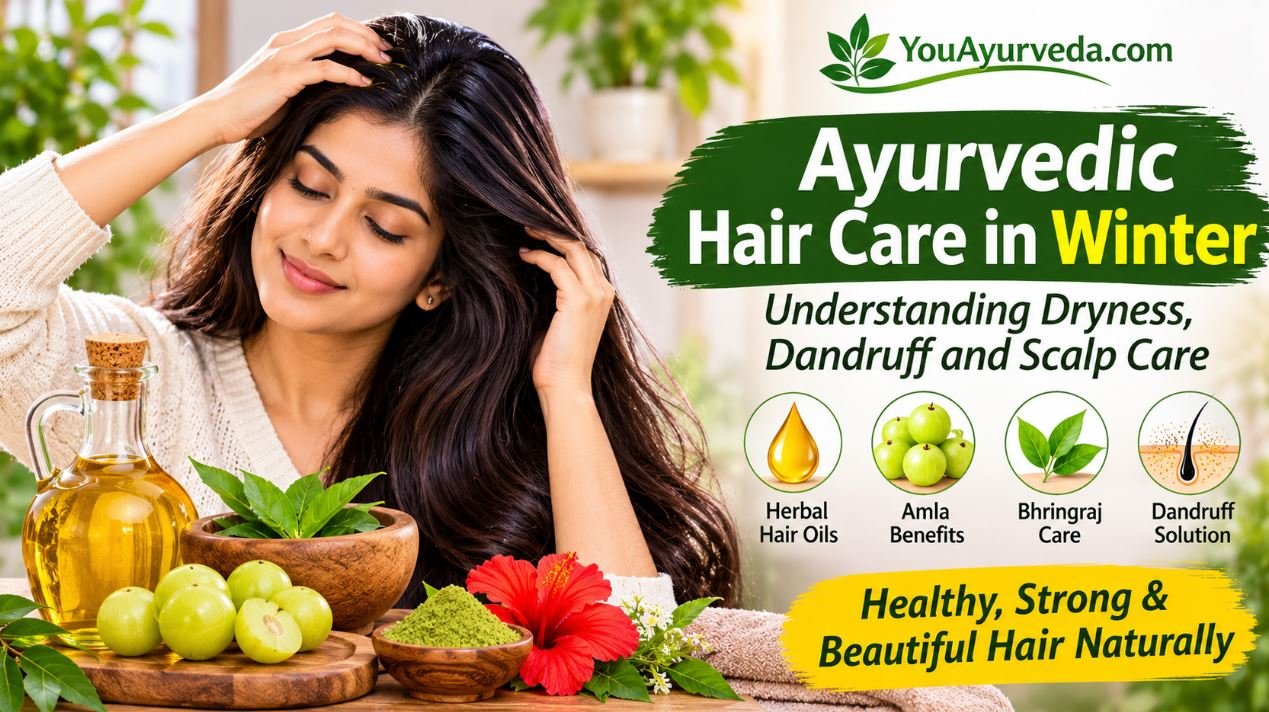
Winter can be challenging for your hair and scalp. As temperatures drop and humidity levels change, many people experience dry hair, an itchy scalp, dandruff and increased hair breakage.
You may notice that your hair feels rougher than usual, your scalp becomes uncomfortable, or white flakes appear on your shoulders.
While changing weather conditions can contribute to these problems, your hair-care routine, scalp condition, diet and overall health also play important roles.
Ayurveda has traditionally emphasised hair and scalp care through practices such as Shiro Abhyanga (head oil massage), suitable dietary habits and personalised lifestyle recommendations.
But how can you combine these traditional practices with modern hair-care knowledge?
In this guide, we explore Ayurvedic hair care in winter, common causes of scalp dryness and dandruff, traditional hair-care practices, and practical ways to maintain healthy-looking hair throughout the season.
Why Does Hair Need Extra Care During Winter?
Winter weather can affect both your scalp and hair.
Cold air, low humidity, indoor heating and frequent use of hot water may contribute to dryness and discomfort.
Some common winter hair and scalp concerns include:
- Dry and rough hair.
- Itchy scalp.
- White flakes or dandruff.
- Hair breakage.
- Frizzy hair.
- Increased scalp sensitivity.
- Loss of moisture in the hair.
However, it is important to distinguish between dry scalp and dandruff.
A dry scalp may result from moisture loss, while dandruff can be associated with conditions such as seborrhoeic dermatitis. These conditions can produce similar symptoms but may require different approaches.
According to the American Academy of Dermatology, dandruff can become more noticeable during colder months, and its causes can include oily skin, hair-care habits and certain medical conditions.
Understanding Hair and Scalp Care Through Ayurveda
Ayurveda traditionally considers hair care as part of overall personal care and wellness.
Several Ayurvedic concepts and practices are associated with maintaining hair and scalp health.
1. Shiro Abhyanga – Traditional Head Oil Massage
Shiro Abhyanga refers to the traditional practice of massaging the head with oil.
It is commonly included in Ayurvedic personal-care routines and is traditionally associated with relaxation and scalp care.
Some commonly used oils include:
- Coconut oil.
- Sesame oil.
- Bhringraj-infused oil.
- Amla-infused oil.
- Other traditionally prepared Ayurvedic hair oils.
The choice of oil should depend on individual suitability, scalp condition and personal preference.
Oil massage may help condition dry hair and improve its feel. However, it should not be considered a proven treatment for dandruff, fungal scalp conditions or hair loss.
2. Prakriti – Understanding Individual Differences
Ayurveda uses the concept of Prakriti to describe an individual's constitution.
Traditional Ayurvedic approaches consider Vata, Pitta and Kapha when discussing personal-care recommendations.
For example:
- Vata is traditionally associated with dryness and roughness.
- Pitta is traditionally associated with heat.
- Kapha is traditionally associated with oiliness and heaviness.
These are traditional Ayurvedic descriptions, not medically validated scalp diagnoses.
An Ayurveda practitioner may consider these concepts while discussing personalised hair-care routines.
3. Dinacharya – Maintaining a Daily Routine
Dinacharya refers to the Ayurvedic concept of a daily routine.
A consistent personal-care routine can help you avoid unnecessary changes in hair-washing habits, product use and sleep patterns.
During winter, maintaining regular hygiene, adequate nutrition and appropriate scalp care is particularly useful.
10 Ayurvedic-Inspired Hair Care Tips for Winter
Here are ten practical habits you can consider incorporating into your winter hair-care routine.
1. Choose a Suitable Hair Oil
Oil application is one of the most familiar traditional Indian hair-care practices.
Coconut and sesame oils are commonly used in traditional hair-care routines.
You can consider the following approach:
- Select an oil suitable for your hair and scalp.
- Apply a small amount to your hair or scalp, depending on your needs.
- Massage gently using your fingertips.
- Avoid vigorous rubbing.
- Wash your hair when necessary.
If you have an oily scalp or persistent dandruff, excessive oil application may not be suitable.
Oil can condition the hair shaft, but it does not replace appropriate treatment for scalp disorders.
2. Include Bhringraj in Your Traditional Hair-Care Routine
Bhringraj (Eclipta prostrata, also known by its synonym Eclipta alba) is a plant traditionally used in Ayurvedic hair-care preparations.
It is commonly found in:
- Hair oils.
- Herbal hair-care formulations.
- Traditional scalp-care products.
Bhringraj has a long history of traditional use, but claims that it reliably reverses hair loss or guarantees hair growth should not be treated as established clinical facts.
If you want to try a Bhringraj-based product, check its ingredients, manufacturer details and suitability for your scalp.
3. Use Amla as Part of Your Hair-Care and Nutrition Routine
Amla, also known as Indian gooseberry (Phyllanthus emblica), is widely used in Ayurveda and Indian food traditions.
It is naturally rich in vitamin C and is used in different forms, including:
- Fresh amla.
- Amla powder.
- Amla-based food preparations.
- Amla-infused hair oils.
Including amla as part of a balanced diet can contribute to nutrient intake.
However, eating amla or applying amla oil should not be presented as a guaranteed solution for hair growth or premature greying.
4. Avoid Excessively Hot Water
Hot showers may feel comfortable during winter, but excessively hot water can strip natural oils from your hair and skin.
Try these simple changes:
- Use lukewarm water.
- Avoid prolonged hot showers.
- Rinse shampoo thoroughly.
- Avoid aggressive scrubbing.
- Use conditioner after shampooing.
These habits can help reduce unnecessary dryness and roughness.
5. Choose the Right Shampoo for Your Scalp
Your shampoo should suit your scalp condition and hair type.
For example:
- Dry scalp: Consider a gentle, non-medicated shampoo.
- Oily scalp: Regular cleansing may be necessary.
- Dandruff: Consider an appropriate anti-dandruff shampoo.
- Sensitive scalp: Avoid products that trigger irritation.
If you have dandruff, dermatologists recommend shampoos containing suitable active ingredients such as ketoconazole, selenium sulfide, salicylic acid or zinc pyrithione, depending on product availability and individual suitability.
Always follow the product instructions.
6. Avoid Excessive Heat Styling
Frequent use of hair dryers, straighteners and curling irons can contribute to hair damage and breakage.
During winter, try to reduce unnecessary heat exposure.
Some practical habits include:
- Allow hair to air-dry when possible.
- Use a heat-protectant product before styling.
- Avoid using very high temperatures.
- Do not pull or brush wet hair aggressively.
- Use a wide-toothed comb when detangling.
Protecting the hair shaft is an important part of maintaining healthy-looking hair.
7. Include Nutrient-Rich Foods in Your Diet
Healthy hair requires adequate nutrition.
A balanced diet should provide sufficient protein, iron, zinc, vitamin D and other essential nutrients.
Consider including:
FoodNutritional contributionAmlaVitamin CAlmondsVitamin E, protein and healthy fatsWalnutsHealthy fatsSpinachFolate and ironLentilsPlant-based protein and ironEggsProtein and other nutrientsMilk or suitable alternativesProtein and other nutrientsSesame seedsMinerals and healthy fatsAyurvedic food traditions include several ingredients that can also contribute to a balanced diet.
Avoid taking high-dose vitamins or mineral supplements without identifying whether you actually need them. Excessive supplementation can sometimes cause harm.
8. Maintain a Clean Scalp
A clean scalp is an important part of hair care.
Contrary to a common misconception, dandruff is not necessarily caused by poor hygiene.
However, appropriate washing can help remove excess oil, sweat, dirt and product buildup.
Follow these habits:
- Wash according to your scalp and hair type.
- Avoid scratching your scalp.
- Rinse shampoo thoroughly.
- Clean your combs and brushes regularly.
- Avoid sharing personal hair-care tools.
- Do not allow heavy product buildup.
If you experience persistent dandruff, use a suitable treatment rather than relying only on oil massage or herbal home remedies.
9. Manage Stress and Maintain Proper Sleep
Stress and poor sleep can affect overall health and may contribute to certain hair concerns.
Ayurveda traditionally emphasises a balanced lifestyle, including appropriate rest and relaxation.
You can consider incorporating:
- Gentle yoga.
- Meditation.
- Regular walking.
- Relaxation exercises.
- Consistent sleeping hours.
- Adequate nighttime sleep.
If you notice sudden or excessive hair shedding, consult a healthcare professional to investigate possible underlying causes.
10. Avoid Experimenting with Too Many Hair Products
Using multiple hair oils, shampoos, masks and herbal preparations simultaneously can make it difficult to identify what suits your scalp.
Some ingredients may also cause irritation or allergic reactions.
Instead:
- Introduce one new product at a time.
- Read the ingredient list.
- Follow the manufacturer's instructions.
- Stop using products that cause irritation.
- Avoid applying strong herbal preparations directly to your scalp without appropriate guidance.
A simple, consistent routine is often more practical than using numerous products.
Popular Ayurvedic Ingredients Used in Traditional Hair Care
Several plants and natural ingredients have a long history of use in Indian hair-care traditions.
Here are some commonly encountered ingredients.
IngredientTraditional hair-care useBhringrajUsed in traditional hair oilsAmlaUsed in hair oils and herbal preparationsBrahmiUsed in traditional hair-care formulationsNeemUsed in traditional scalp-care productsHibiscusUsed in hair masks and oilsFenugreek (Methi)Used in traditional hair masksCoconut oilUsed for hair conditioningSesame oilUsed in traditional oil massageImportant: Traditional use does not automatically establish clinical effectiveness. The quality, concentration, formulation and safety of a product matter. Natural ingredients can also cause irritation or allergies.
Dry Scalp vs Dandruff: What Is the Difference?
Many people assume that all white flakes indicate dandruff. However, different scalp conditions can produce similar symptoms.
FeatureDry scalpDandruffCommon appearanceSmall, dry flakesWhite or yellowish flakesScalp conditionOften feels dry or tightMay be oily or itchyPossible triggersLow humidity, irritating productsSeborrhoeic dermatitis, oily scalp and other factorsGeneral careGentle shampoo and suitable moisturising careAppropriate anti-dandruff shampooMedical assessmentIf persistent or severeIf persistent or severeThe distinction is not always obvious. A dermatologist can help identify the underlying condition.
Common Winter Hair-Care Mistakes to Avoid
Even when following a regular hair-care routine, certain mistakes can contribute to hair and scalp problems.
Avoid these common habits:
1. Applying excessive oil: More oil does not necessarily mean healthier hair.
2. Washing with very hot water: Excessive heat can increase dryness.
3. Ignoring dandruff: Persistent flakes and itching may require targeted treatment.
4. Scratching the scalp: Scratching can irritate or damage the skin.
5. Using too many herbal products: Multiple products can increase the risk of irritation.
6. Skipping conditioner: Conditioner can help improve hair manageability and reduce friction.
7. Ignoring excessive hair shedding: Hair loss can have several causes, including nutritional deficiencies, hormonal changes and medical conditions.
When Should You Consult an Ayurveda Doctor or Dermatologist?
Traditional Ayurvedic hair-care practices may form part of a personal wellness routine. However, persistent scalp problems should not be managed through home remedies alone.
Consider seeking professional advice if you experience:
- Persistent dandruff.
- Severe scalp itching.
- Redness or inflammation.
- Painful scalp patches.
- Sudden or excessive hair shedding.
- Patchy hair loss.
- Scalp sores or discharge.
- Hair problems that do not improve with appropriate care.
A qualified Ayurveda doctor can discuss traditional approaches and personalised lifestyle recommendations.
A dermatologist can diagnose scalp conditions and recommend evidence-based medical treatment when necessary.
If you are considering Ayurvedic formulations alongside prescribed medication, discuss potential interactions with your healthcare professional.
Do not discontinue prescribed treatment without medical advice.
Final Thoughts: Build a Consistent Winter Hair-Care Routine
Winter hair care is not about using the maximum number of products or following every traditional remedy you encounter.
It is about understanding your scalp, choosing suitable products, maintaining good hygiene and supporting your overall health through balanced nutrition and lifestyle habits.
Ayurvedic traditions offer several familiar hair-care practices, including Shiro Abhyanga and the use of ingredients such as amla and Bhringraj. These can be explored as part of a personal-care routine, provided their limitations and safety considerations are understood.
Remember that dry scalp, dandruff and hair loss are different concerns. Identifying the underlying problem is more important than trying multiple remedies without guidance.
Disclaimer: This article is intended for general educational and informational purposes only. It does not replace medical diagnosis, treatment or personalised advice from a qualified healthcare professional. Traditional Ayurvedic practices are discussed for educational purposes and should not be considered proven treatments for hair loss, dandruff or other scalp disorders.